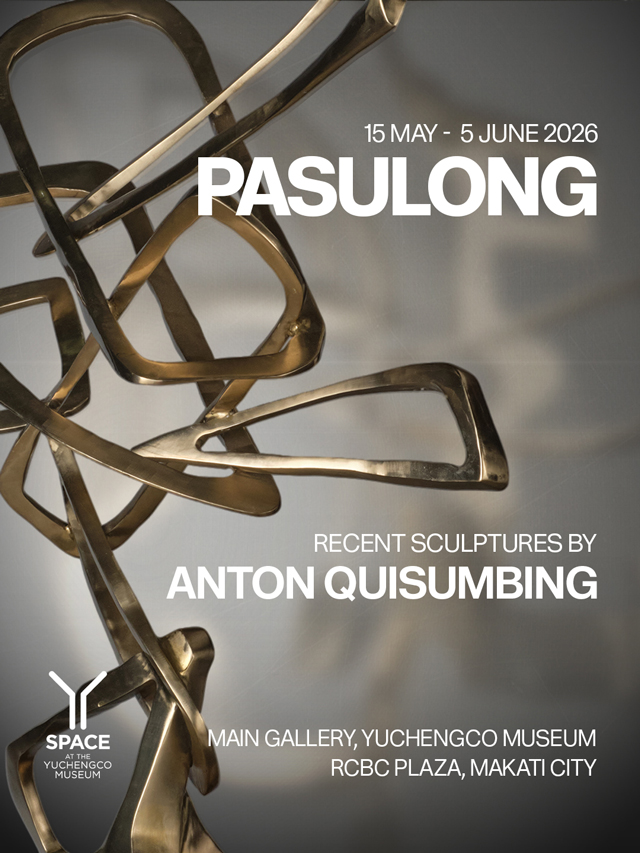
Cebuano artist turns Odette debris into sculptures in Makati exhibit
Jewil Anne M. Tabiolo | photography by Zach Aldave
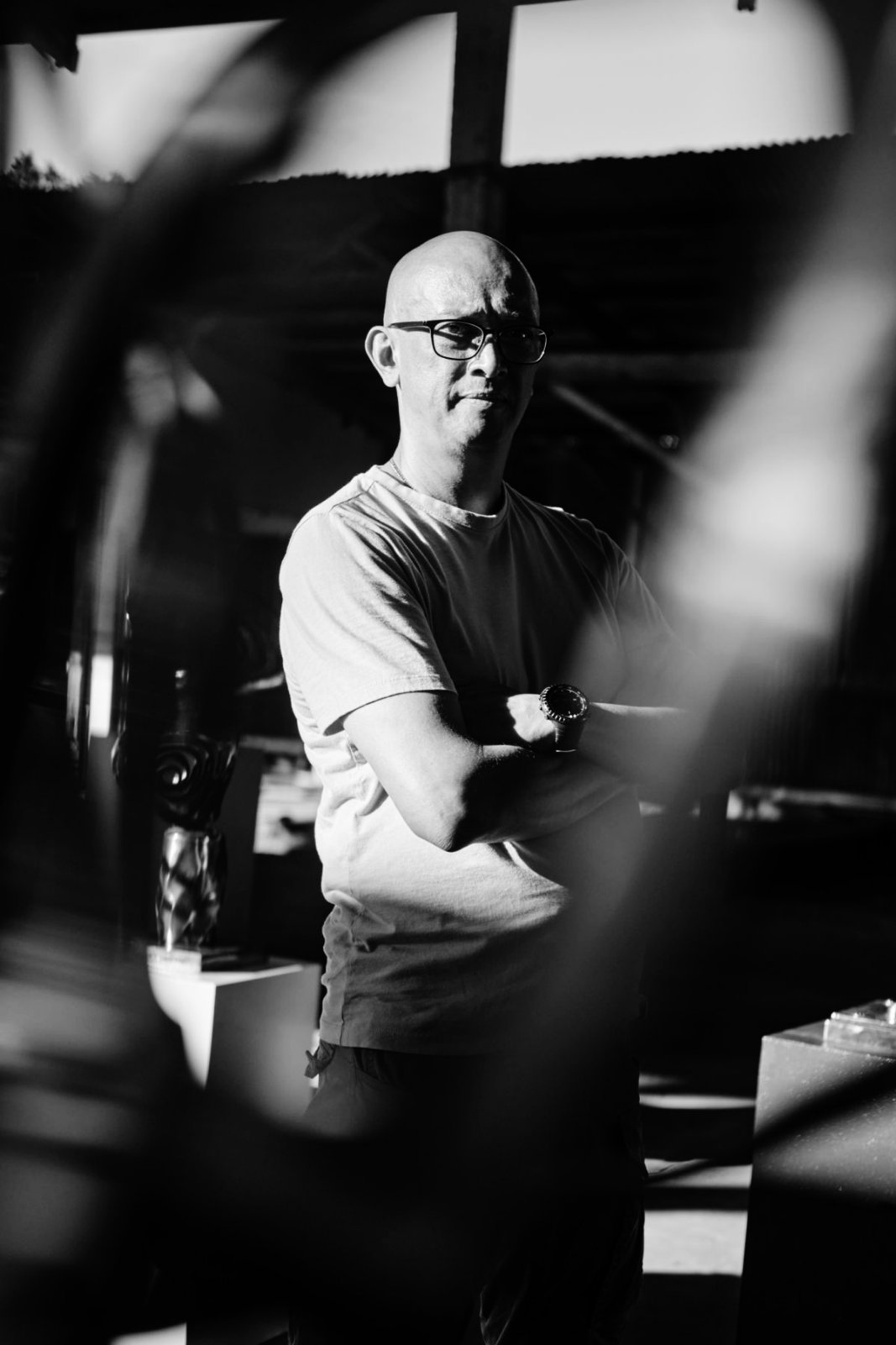
This Cebuano artist creates as though he is trying to listen to what broken things still remember. Born in 1970, Anton V. Quisumbing approaches material not as something to dominate, but as something to negotiate with.
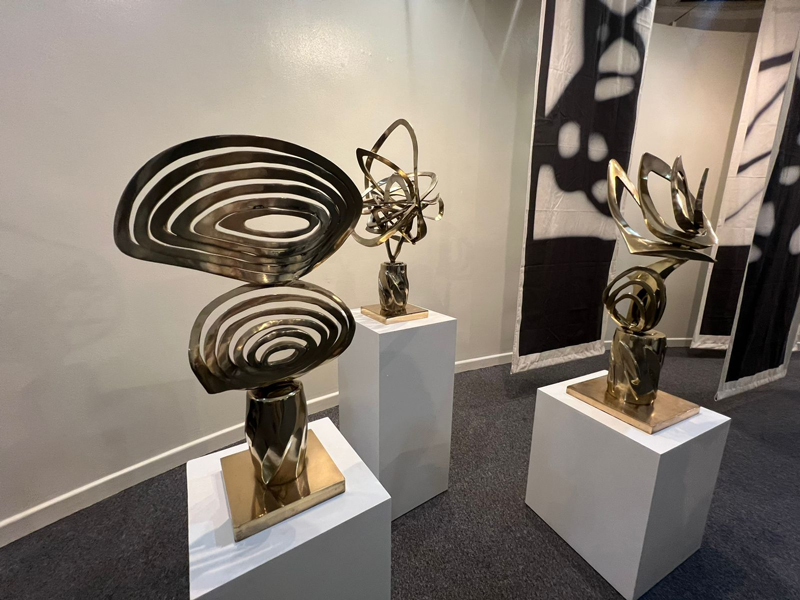
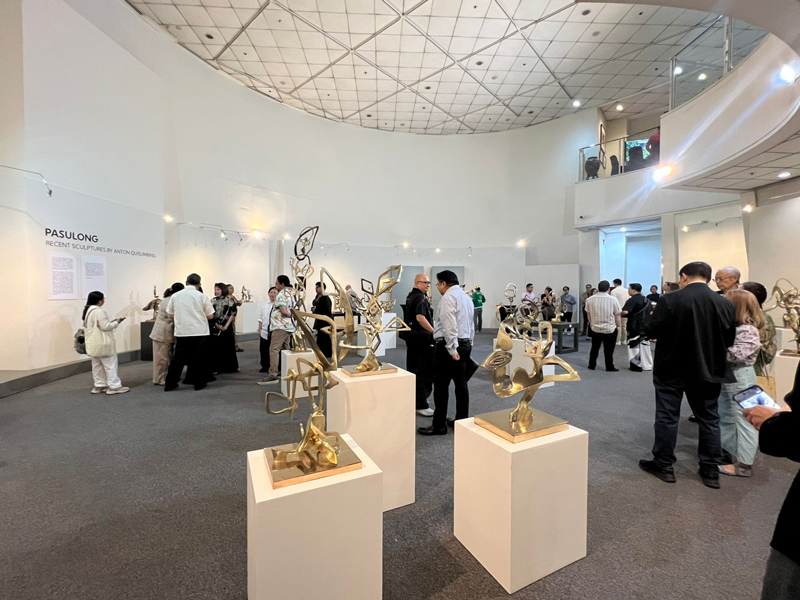
In his ongoing exhibition “Pasulong: Recent Sculptures by Anton V. Quisumbing” at Yuchengco Museum, Makati City, 29 compositions emerge from salvaged bronze boat propellers recovered in the aftermath of typhoon Odette, which struck the Visayas in 2021. “They already carried history, movement and human experience within them,” Quisumbing said.
For two years, he worked through the remains of these propellers, piecing them back together not to restore their original function, but to transform their memory. The resulting works became “Pasulong,” a word that translates to “forward.”
Memory, moving forward
More than an exhibition of reconstructed metal forms, “Pasulong” is Quisumbing’s reflection on what it means to move forward after rupture. Built from objects shaped by disaster, the works refuse clean endings or restored wholeness. Instead, they hold onto fracture as evidence of survival.
With the Philippines frequently facing typhoons, it is difficult to fully hold the scale of Odette’s devastation in 2021. Reports estimated that damage in Cebu City alone reached P1.7 billion in infrastructure, utilities and agriculture.
Moving forward, the exhibition suggests, is never clean or linear.
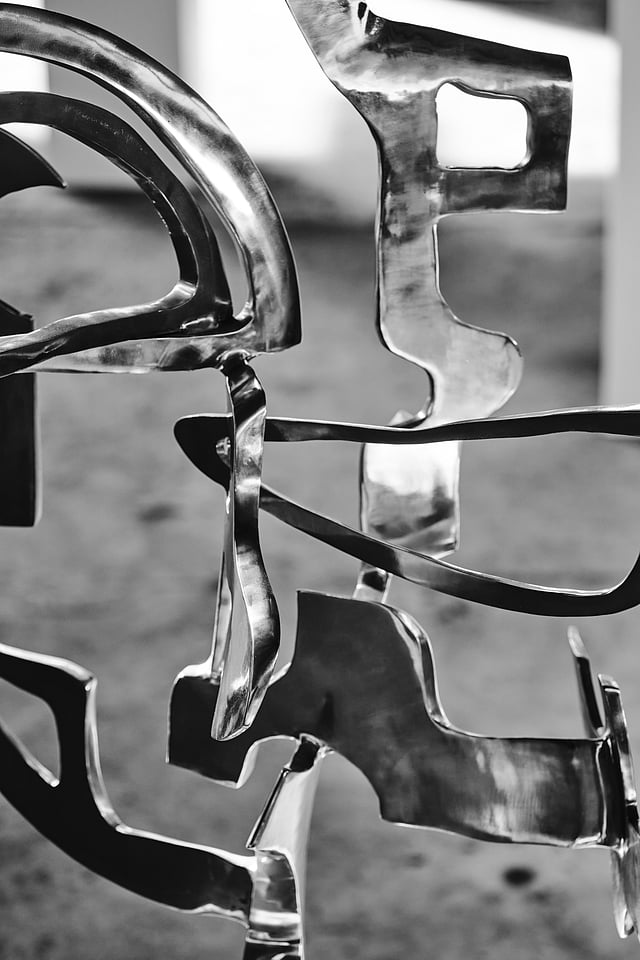
Preservation of memory
That awareness sits at the core of the exhibition. Quisumbing leans into irregularities and imperfections as proof of the uneven process of rebuilding.
Quisumbing describes the process as an act of preservation through making. “I wanted the works to stand as reminders of our resilience as people,” he said, “how even after destruction, we continue to rebuild, move forward and create meaning from difficult experiences.”
Working through the stubbornness of bronze became its own confrontation. The material took time and patience. Healing, like sculpture, is slow and never easy.
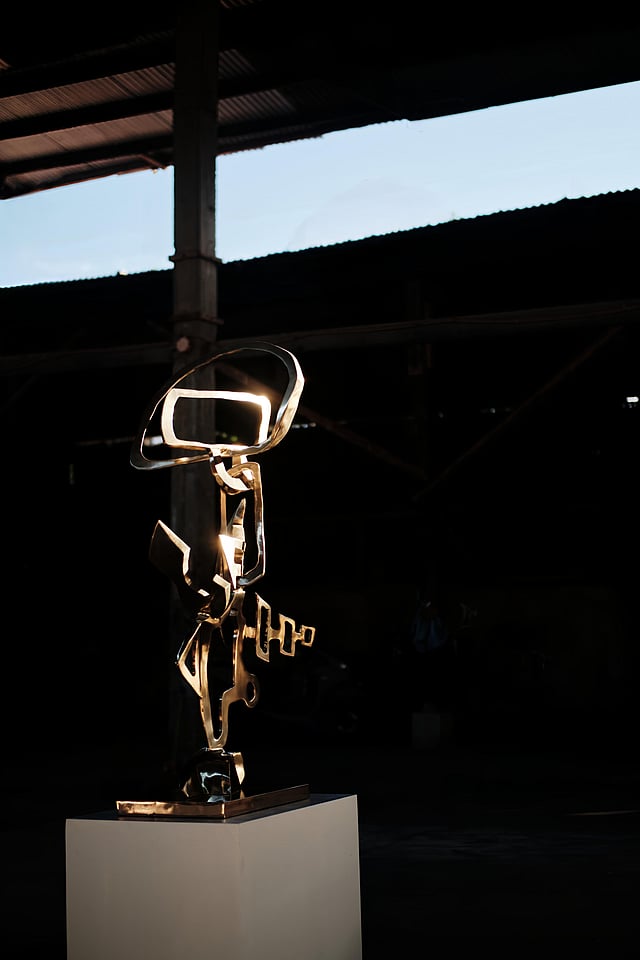
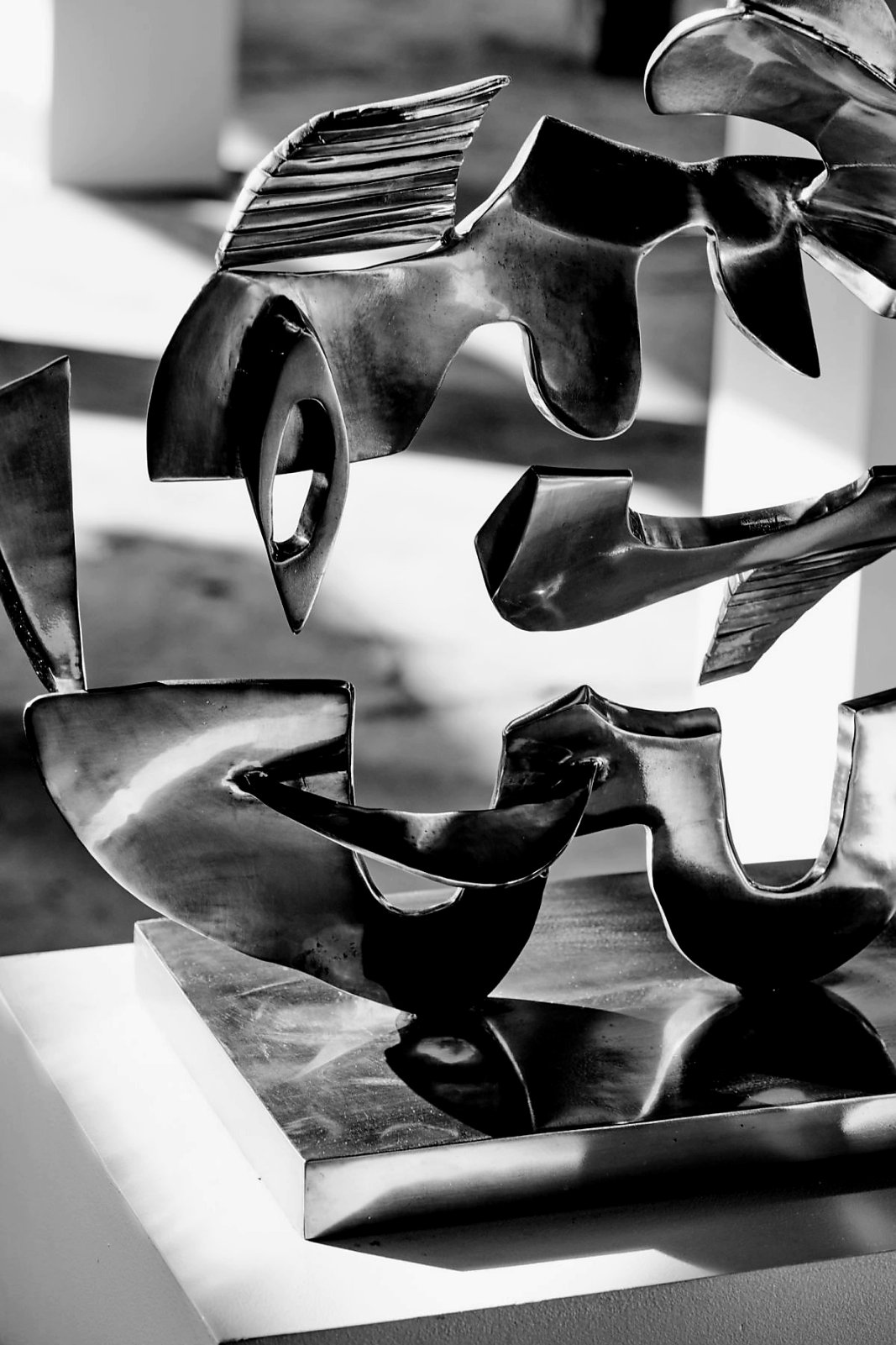
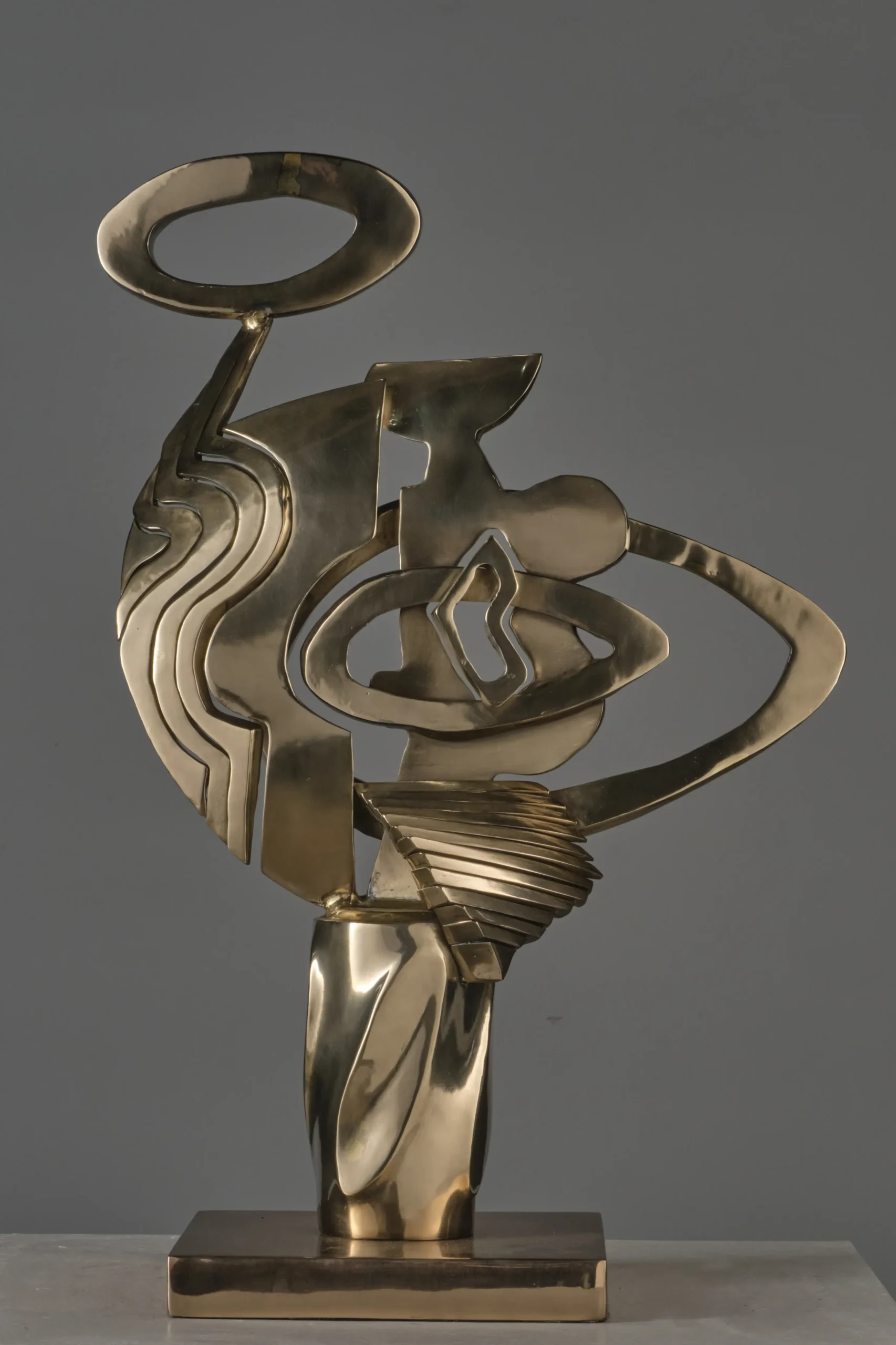
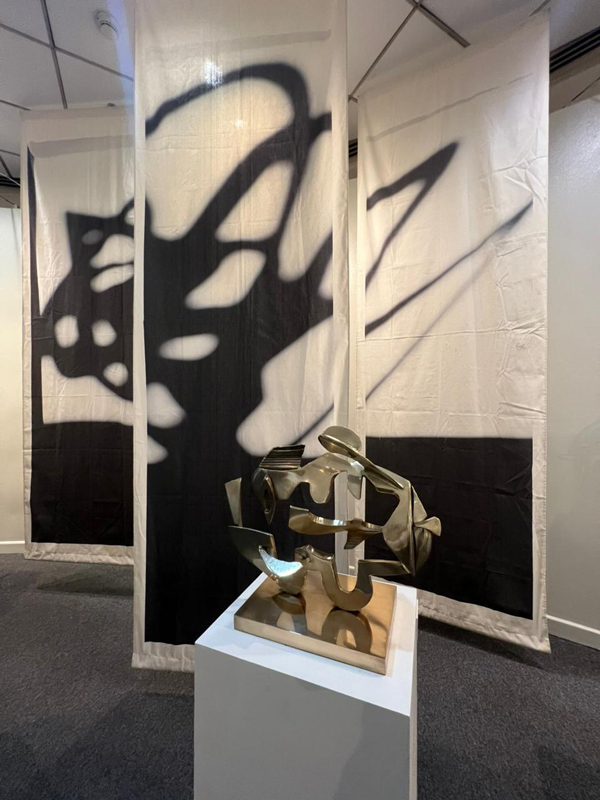
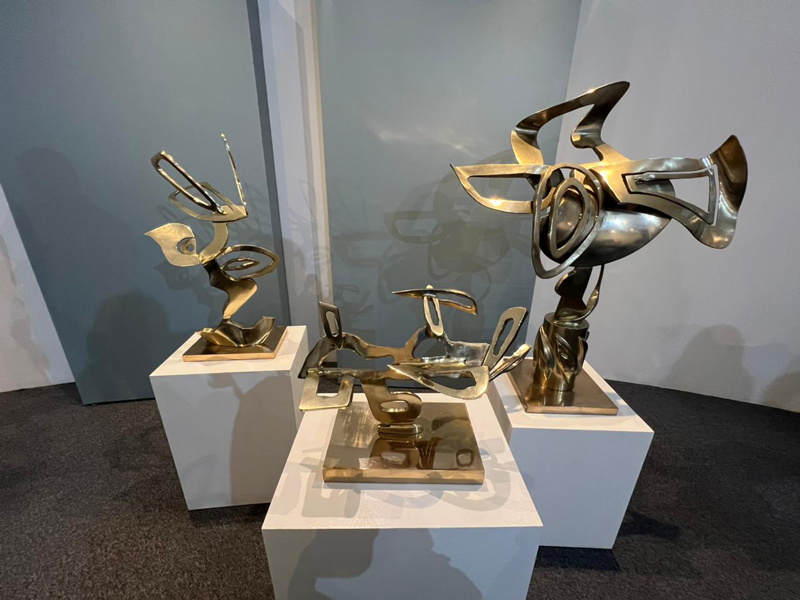
Inside the gallery, those tensions take shape in arcs, spirals and fragmented silhouettes suspended between collapse and emergence. One of the central works, “Sight,” presents a distorted figure balanced on a twisting metal base. An almond-shaped eye stretches across its center, while armor-like forms suggest both protection and vulnerability.
A return to sculpture
After spending time focused on painting, this exhibition marks Quisumbing’s return to three-dimensional form. For him, painting and sculpture are not separate practices but continuous conversations.
“Painting and sculpture complement each other in my practice,” he explained. “Painting allows me to explore emotion, memory, form and movement, while sculpture gives those ideas physical form and presence.”
“Painting often serves as a study that leads to sculpture, helping me develop composition and structure before translating them into three-dimensional works. Through sculpture, I can further explore space, light, weight and material in a more physical way.”
Though his past works have been exhibited internationally in Malaysia, Spain and the United States, Quisumbing’s practice remains rooted in his Cebuano sensibility, one that speaks through material to the lived realities of communities.
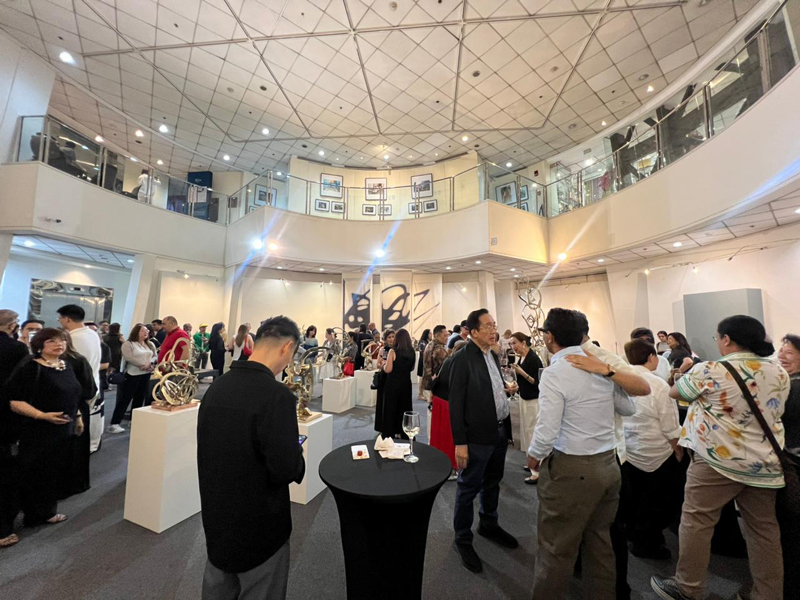
Curated by Miguel Rosales, “Pasulong” opened on May 15, 2026, and runs until May 30.
SOURCE: sunstar.com.ph
Pasulong; Anton Quisumbing at the Yuchengco Museum
by Mia Durano | photography by Zach Aldave
There is something about walking into the Yuchengco Museum that sends a signal before you’ve even seen the artworks. Situated in RCBC Plaza, right in the middle of Makati’s financial district, it is an institution with a point of view — a forum as much as a gallery. So when the energy of an exhibition opening spills past the main hall and into the corridors, something tells you that someone has earned their way in.
Pasulong is Anton Quisumbing’s first solo exhibition in over two decades. Twenty-nine sculptures that took two years to complete, all cast in bronze, made from propellers salvaged from boats damaged by Typhoon Odette in 2021. Those who knew what that ill-fated period was like understand why the timeline matters. This is not decorative bronze; rather, it is marine-grade, built to resist corrosion and force. It is a material that does not yield to the ravages of the ocean.
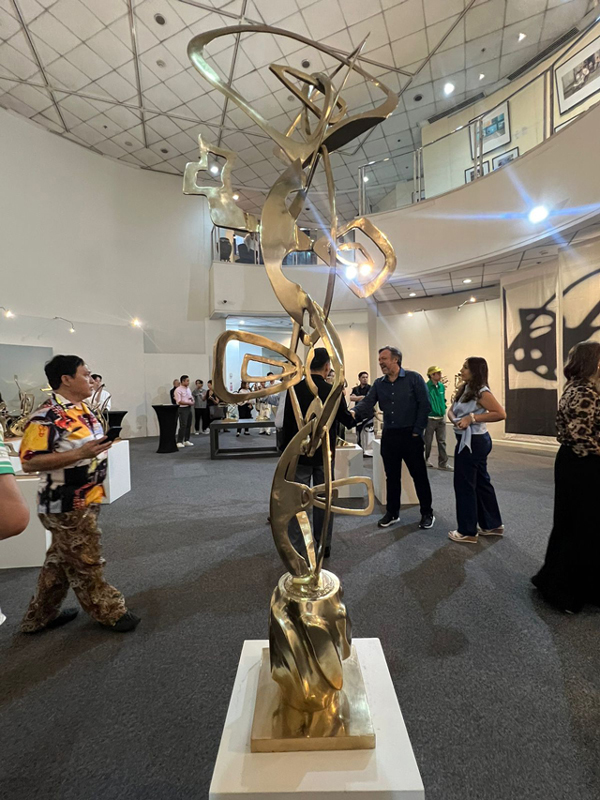
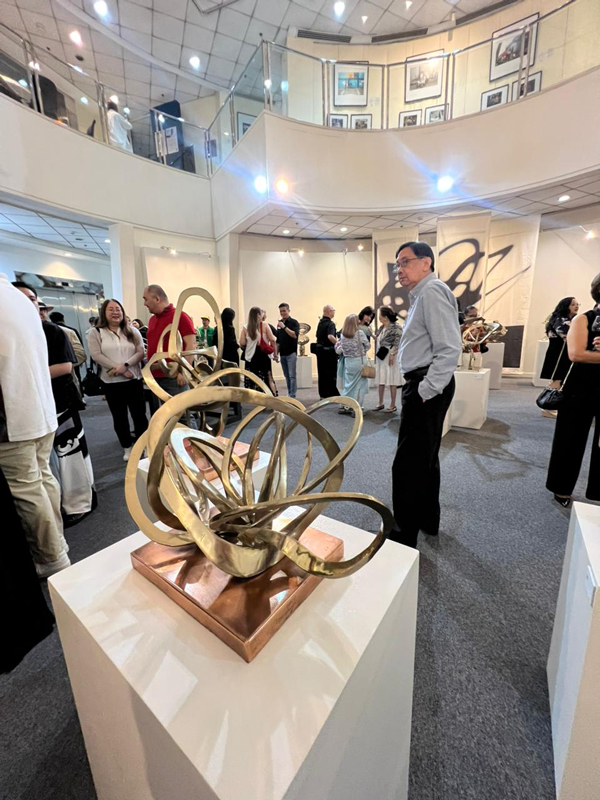
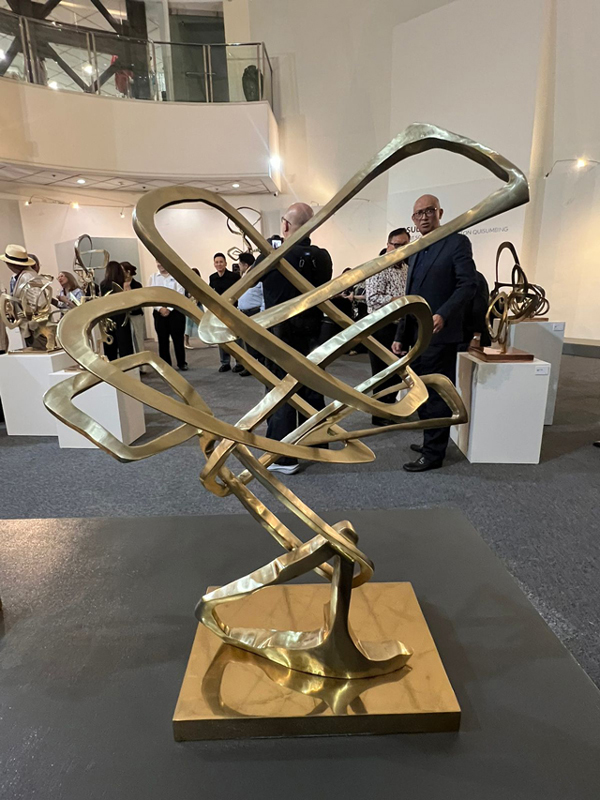
There is a reason why metalwork is described in physical terms — it is cold, harsh, brash, forceful, and resistant. And when you walk into a room full of bronze sculptures, that experience becomes resonant. Propulsion, with its loops, arcs, and curves that rise, descend, and turn back into shape, embodies this. There are no right angles and no hard stops here. In this particular piece, the artist is remarkably aware of its sinuous movement and instead finds its voice within the medium.
This is the tension Anton Quisumbing works with. His practice has always tested what a single material can hold, allowing every movement to maintain the weight of its volume. Pasulongdoes not present a clean arc of recovery; instead, it delivers the full range of its intentions.
Sight, a warped figure with an almond eye and armor along one side, carries what the exhibition describes as a sense of lightness despite the weight we carry in our lives. The work stands with the authority of something that has found its own gravitas. The artist leans toward the idea that recovery is not resolved in one sweeping gesture.
Anton Quisumbing spent years away from sculpture, turning instead to painting as his primary medium. In Pasulong, he returns to bronze and to the physical demands of the material, which, in a way, becomes an act of pushing further toward his original vision. The outcome is an artist in full control of both subject and medium.
SOURCE: zee.ph
Anton V. Quisumbing Returns to Sculpture at the Yuchengco Museum with Pasulong
by Caryll Ong
Pasulong by Anton V. Quisumbing explores loss, longing, and repair. Two years in the making, Quisumbing pieced together the remains of bronze propellers from boats damaged in the aftermath of Typhoon Odette in 2021.
Curated by Miguel Rosales and designed by Caramel Creative Consultancy, the exhibition consists of twenty-nine compositions. The works suggest that moving forward is rarely linear, mirroring the artist’s return to sculpture after a solitary period devoted to painting.
What does Pasulong mean to Anton Quisumbing?
Working with bronze, Quisumbing reaffirms his ability to adapt to both material and circumstance. The material’s malleability is both unforgiving and physically taxing. The sculptures showcase arcs and material curvatures that underscore motion: from shapes that are reminiscent of spiritual symbols to others that present themselves as buried strokes towards elsewhere.
In Pasulong, Quisumbing examines what a man can make in the aftermath of destruction. This exhibition also serves as a prelude to his new direction in his artistic practice.
Beauty Emerges from the Wreckage
Depicting a misshapen figure standing tall on a twisting metal base, Sight is a pivotal piece in the collection. Its almond-shaped eye runs horizontally across its center, with an armor on the left that appears to shield it from external aggressors. Ultimately, it demonstrates lightness despite the weight of what we carry, including the artist’s reflection on imperfection.
Pasulong attempts to make sense of the wreckage while building something new. The exhibition marks his point of departure from painterly ways and into concrete forms of mending.
SOURCE: blueprint-onemega.com
PHOTOS by Julieanne Ng